
Recently, there has been a growing demand for rapid, low-cost home-based removal of skin lesions. But there are also DIY solutions available from online shops and pharmacies that can freeze off skin tags, warts, or other growths without visiting a clinic. Self-removal has real medical and cosmetic risks, although readily accessible.
Many of our patients at Cryosonic Basingstoke will have already tried various home treatments first, only to seek help from us when that mole or skin lesion continues to grow, becomes angry and itchy, or becomes embedded in the skin. If you understand the limitations and risks associated with self-removal, you can make a more informed, safer choice for your skin.
The Rise of DIY Skin Lesion Removal
Home skin-removal products have become increasingly popular. Sometimes these treatments appear so simple and harmless on social media, in online videos, and even as quick-fix beauty trends. However, many people believe that if a product is available over the counter, it must be perfectly safe.
However, skin lesions vary greatly. Those skin tags or tiny bumps may actually be a wart, a mole, or an occasional sign of something treatable. Home treatment of a skin lesion without examination and assessment may lead to unnecessary complications or delay prompt diagnosis of the correct condition.
Methods to help you pick a provider of treatments for skin disorders, which may seem plausible just by Googling near me, DIY solutions rarely offer the scientific accuracy and temperature control required for safe treatment.
Temperature Differences: OTC vs Medical-Grade Cryotherapy
One of the biggest differences between home treatments and professional cryotherapy is temperature.
Over-the-counter freezing kits typically reach temperatures between -20°C and -50°C. These temperatures are often not cold enough to effectively destroy deeper skin lesion cells.
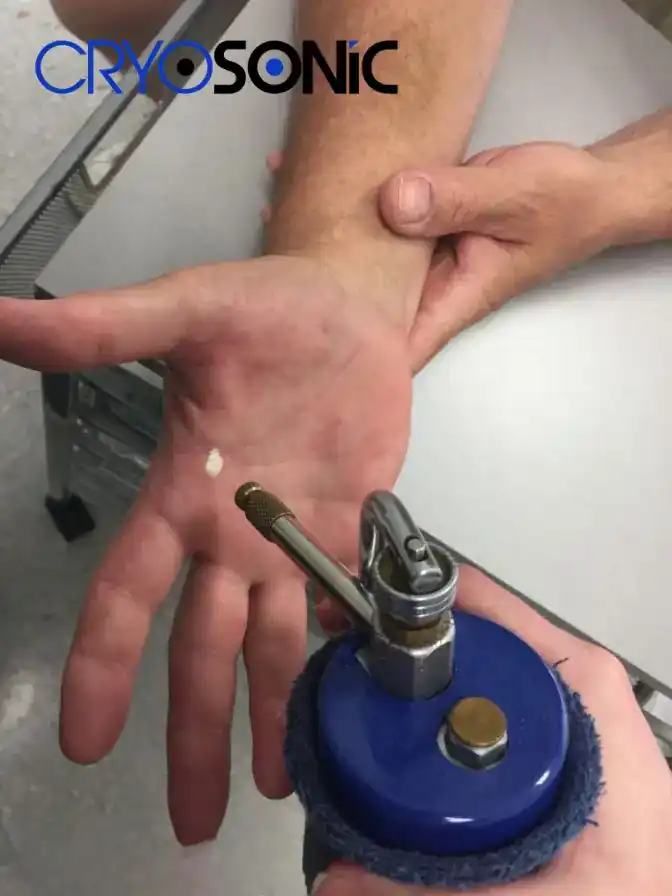
Medical-grade devices used in clinics, such as those used at Cryosonic, can reach approximately -89°C using pressurised nitrous oxide. This much lower temperature allows practitioners to target abnormal cells more precisely and effectively.
More commonly, the home kits are weaker, so people have to repeat treatments several times. Repeated freezing can lead to increased irritation and damage to the surrounding skin without completely removing the skin lesion.
Why Accurate Targeting Matters
Treating skin lesions requires precision.
Professional cryotherapy involves aiming the device’s freezing tip directly at the skin lesion, leaving healthy skin unexposed. Measurement of lesion before the initiation of treatment: size, shape and depth.
This precision can be hard to achieve with DIY kits. Many applicators are unwieldy or imprecise, raising the risk of causing frostbite in surrounding healthy tissue. Book Your Consultation Today
A small targeting error can result in unnecessary inflammation, blistering, or skin damage in the area around the lesion.
Risk of Freezing Healthy Tissue
When cryotherapy is performed incorrectly, healthy skin can be affected along with the skin lesion.
Freezing normal tissue may lead to:
- Painful blistering
- Extended redness and swelling
- Skin irritation
- Potential scarring
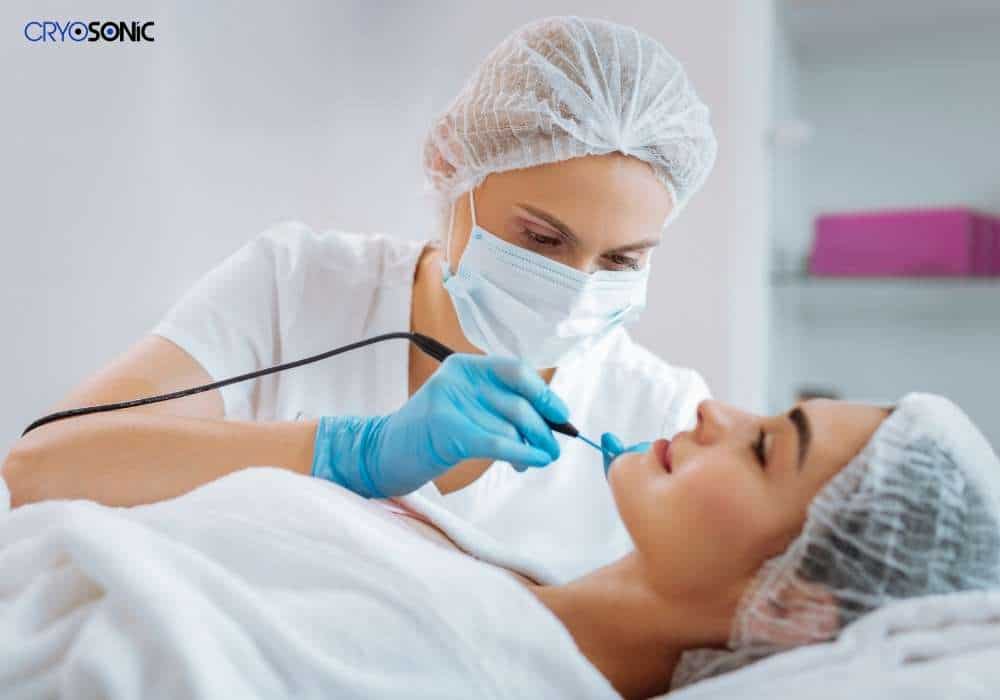
Professional practitioners carefully control the freeze time, freeze depth, and treatment area. At Cryosonic, treatment is tailored to the lesion type and location to minimise unnecessary damage to surrounding skin.
Home treatments simply cannot provide the same level of control.
Infection Risk and Poor Aftercare
The area will need some aftercare as it heals from any skin treatment.
DIY treatments typically involve minimal aftercare instructions, and many underestimate the importance of protecting the area treated. Picking at the lesion, exposing it to bacteria, or failing to keep that area clean can cause infection.
Increased redness, swelling, fluid discharge, or ongoing pain may indicate an infection.
Professional clinics offer explicit aftercare instructions and can guide patients on what to expect as they heal. At Cryosonic, the stages of healing processes are explained to clients so they know what to expect and when they should seek guidance.
The Danger of Misdiagnosing a Suspicious Skin Lesion
Perhaps the most important reason to avoid DIY lesion removal is the risk of misdiagnosis.
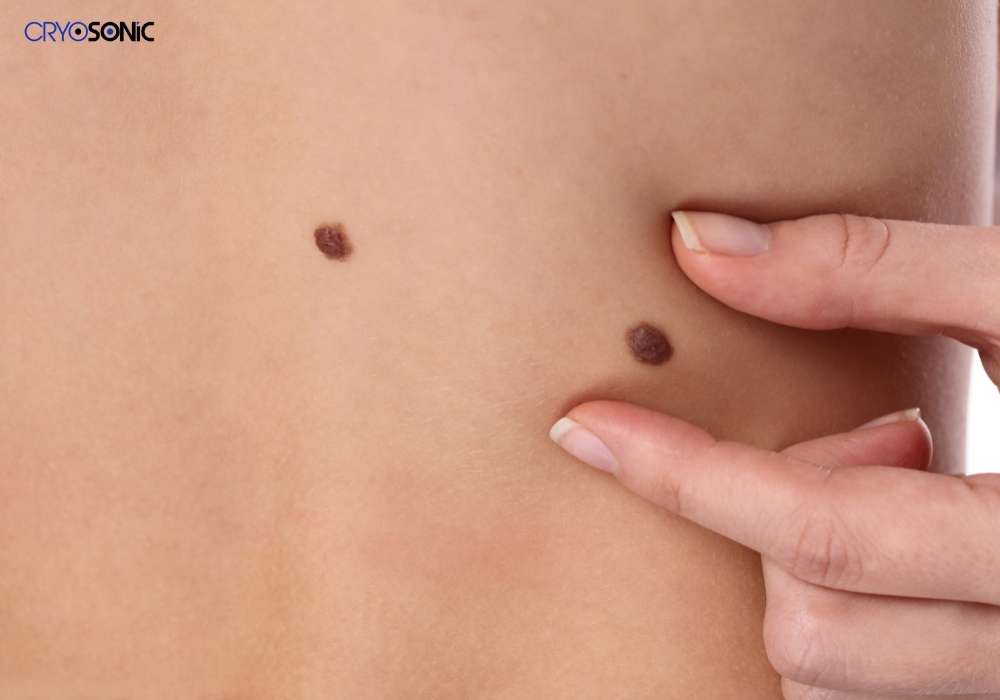
Not every skin growth is harmless. Some skin lesions require medical evaluation before any cosmetic treatment is considered. The difference between these can be difficult to recognise without professional training:
- skin tags
- moles
- warts
- seborrhoeic keratoses
- other pigmented lesions
Attempting to freeze a suspicious skin lesion at home may delay the appropriate medical assessment.
Professional practitioners are trained to recognise when a lesion should not be treated and when referral to a GP or dermatologist is necessary. See Here Why People Choose us For Lesion Removal Treatment
When a “Skin Tag” Could Be Something More Serious
However, many are under the impression that a minor protrusion or lump has to be a simple skin tag. In fact, several different skin conditions can appear quite alike.
Some moles or pigmented lesions can also look like skin tags (the raised ones). Because you may be freezing the lesion without properly evaluating the cause of the lesion, instead of removing tumours seen from outside, without treating the root problem.
Deleting a skin lesion for an incorrect reason can sometimes mislead future diagnosis as well.
This is the reason why a professional assessment is always recommended before treatment.
Why Proper Assessment Reduces Risk
A trained professional assesses several key factors before administering cryotherapy:
- the type of lesion
- its size and depth
- Its location on the body
- the patient’s skin type
- If the lesion has any concerning features
If the recommended therapy is safe and appropriate, it will be made based on this evaluation.
Patient safety is first and foremost at Cryosonic. If a possible lesion has characteristics that warrant clinical assessment, patients are advised to seek the opinion of their GP first and not go ahead with cosmetic treatment.
This measured approach helps safeguard patients from undue risk.
Cost vs Consequence: The Hidden Price of DIY
Less expensive options like DIY treatments (which, if they go poorly or are not performed properly, end up being far more difficult and problematic) get full credit here.
Home treatments often result in the following:
- incomplete lesion removal
- skin irritation
- persistent redness
- scarring
- infection
- the requirement for aprofessionals corrective action later
When these problems arise, patients routinely visit a clinic after all — sometimes with more complicated skin issues than in the first place.
This can be time-consuming and frustrating to navigate, so getting the right treatment in place from the start is invaluable. See Here: Why Some Lesions Need Multiple Treatments?
When to Seek Professional Assessment
If you spot a skin lesion that you would like to have removed, it’s safest to consult a professional first.
You must avoid DIY removal for something like a lesion if:
- changes in colour or size
- has irregular borders
- bleeds or becomes painful
- grows rapidly
- Looks different from your other moles
Even if the skin lesion is harmless, its proper evaluation will give you peace of mind.
Always seek professional guidance to ensure your skin is treated safely and effectively from the start. Prioritising expert assessment and treatment not only safeguards your well-being but also provides lasting peace of mind.
Frequently Asked Questions About Multiple Cryotherapy Treatments
Q: Is it really safe to freeze off a skin tag at home with an over-the-counter kit?
Freezing at home could be the quick fix, but this is not always a safe and effective method. They do not heat up to the same temperatures as professional devices and therefore may not eliminate the lesion or can irritate surrounding healthy skin. And usually, it is better to have a look first.
Q: How is professional cryotherapy different from the freezing kits you can buy at home?
The biggest difference is the strength and accuracy of the treatment. Professional devices reach much colder temperatures and allow the practitioner to target the lesion very precisely. Home kits are milder and much harder to apply accurately.
Q: How can I tell whether a skin growth is a skin tag, a wart, or something more concerning?
It’s actually harder than most people think to tell the difference just by looking at it. Skin tags, warts, and certain moles can appear very similar. Having a professional assessment helps make sure the skin lesion is safe to treat.
Q: Could I accidentally damage healthy skin when using a DIY freezing kit?
Yes, it’s possible. When the frozen product goes beyond the lesion, it can damage adjacent skin. And this could result in blisters or redness or irritation, and if extreme, a very small scar.
Q: Does professional cryotherapy hurt?
Most people feel a brief cold or stinging sensation during treatment. It’s usually quick and settles shortly afterwards.
Q: Can trying to remove a lesion at home delay a more serious diagnosis?
In some cases, yes. If a skin lesion hasn’t been properly checked first, removing it at home could hide signs that a professional would normally want to examine more closely.
Q: What warning signs mean I should see a professional instead of trying to remove the skin lesion myself?
If the lesion changes colour or size, has uneven edges, starts bleeding, becomes painful, grows quickly, or looks different from your other moles, it’s best to have it checked professionally.
Q: How would I know if a lesion becomes infected after a DIY treatment?
Watch for signs like increasing redness, swelling, discharge, or pain that gets worse rather than better. If you notice these symptoms, it’s best to seek medical advice.
Q: Why do people sometimes need to use DIY freezing kits more than once?
Home kits typically don’t get cold enough to fully destroy the lesion in one treatment. For this reason, many repeat the treatment, which while it can irritate skin, doesn’t solve the issue entirely.
Q: What if I try to freeze a lesion at home and it doesn’t completely disappear?
This happens quite often. The lesion can appear smaller but still be visible. And when that happens, many are forced to go to the clinic afterwards to have it treated properly.
For further information, please get in touch with us today at 03300 100 392